Southwest students gain global knowledge from Japanese course
December 15, 2025
Southwest High School students are discovering how the Japanese language is a never-ending source of academic energy.
Silver Hawks like Arrisyn and Jess are creating brilliant learning moments in a class that features many interactive lessons. Southwest is one of the few Nebraska high schools to offer the world language, and scores of students are learning from an award-winning curriculum. They brush up on their calligraphy skills, experience tea tasting on a local college campus and correspond with pen pals in Japan each year.


Arrisyn and Jess both wanted to sign up for the course when they enrolled at Southwest this fall. The ninth graders said they have been happy with the variety of activities on the class calendar.
“I just really like the Japanese culture, and I thought it would be fun to try it,” Jess said. “It’s been great. I’ve really liked learning the writing style and figuring out how to come up with sentences and paragraphs. It’s been a really good experience for me.”
“Honestly, the entire experience has been awesome,” Arrisyn said. “Everyone in the class is really open and welcoming, and that makes you feel good, because you know everyone is going for the same thing. We’re all trying to get better at Japanese because we like the culture and history of it.”
LPS Curriculum Specialist for World Language Katie Damgaard said Southwest is the only LPS high school that provides Japanese classes. The course has taken place at Southwest ever since the school opened in 2002.
Southwest teacher Tammy Lamprecht earned the 2023 Outstanding World Language Teacher Award from the Nebraska Languages Association because of her commitment to her craft. She said it is satisfying to teach a world language because of the many academic opportunities that are available. She has watched her students learn valuable life skills such as persistence, teamwork and dedication in her classroom. They have also gained knowledge about geography, culture, history and fine arts from their lessons.
“Language is something that constantly changes over time, so there’s never an end to the things to study,” Lamprecht said. “There’s such a depth to the Japanese language and the culture, which makes it extremely fun.”

ACTFL Language Connects, a national organization of teachers of world languages, provided one of the reasons why learning Japanese is an important skill. They surveyed 1,200 U.S. employers about their need for employees familiar with world languages. The report showed that 17 percent of companies wanted to hire employees who knew how to speak Japanese, making it one of the top five in-demand languages.
Lamprecht began studying Japanese in 1990 and spent a year at Kwansei Gakuin University in 1994-95. She later returned to Japan for three years before beginning her education career outside of Lincoln. She founded the LPS program in 2002 and is now teaching the children of those first alumni in her classrooms.
Lamprecht said one of the most rewarding parts of her job is watching students become familiar with the language’s writing style. The Japanese alphabet features the scripts of kanji, hiragana and katakana, which are phonetic symbols and logographic characters. It is different from Latin or Germanic languages such as English, Spanish, French and Italian, which can make it seem more challenging to learn.
“I think a lot of students think that because of the writing system it might be daunting, and then they realize that they can do it,” Lamprecht said. “My favorite part is equipping them so they can do this on their own. There comes a time when I tell them, ‘You don’t need me for this, because you have all of the tools to be successful. You can do this.’ I love those moments.”


Arrisyn said she has been proud of her progress with the language’s fundamentals. She is more comfortable with the sounds and words than she was several months ago.
“One hundred percent,” Arrisyn said. “I still have a long way to go, but I feel way more confident about reading and writing the language now than I did at the start of the year. It’s a really good feeling.”
Lamprecht tries to increase student wellbeing with many interactive projects. The Silver Hawks began one class period with a game that reinforced Japanese language principles. Students competed to see who could most quickly match the sounds of Japanese words with the correct symbol from more than 20 cards on their desks.
The class then moved on to a calligraphy assignment, which provided additional training with the written word. They brushed Japanese characters on special paper in a practice referred to as shodo. Calligraphy is an important part of the country’s culture and is a key part of the school curriculum there.
Jess said he has benefited in many ways from the wide assortment of lessons.
“It really helps with reviewing the sounds,” Jess said. “I have fun doing this, and I think that helps me absorb everything a lot better.”

Lamprecht said she is optimistic that even more students will gain similar academic energy in the future. LPS has created a course for sixth and seventh graders that introduces them to multiple world languages. The goal is to prepare students for global careers by helping them become more aware of various cultures.
“That’s been wildly successful,” Lamprecht said. “It makes me feel good knowing that we’re preparing students like this at LPS.”
LPS students are becoming informed global citizens with their world language experiences. Visit home.lps.org/worldlanguage to learn more about a wide range of language opportunities at LPS.
Do you have a story idea? Share it with the LPS Communications Team by filling out this form!
Published: December 15, 2025, Updated: December 15, 2025
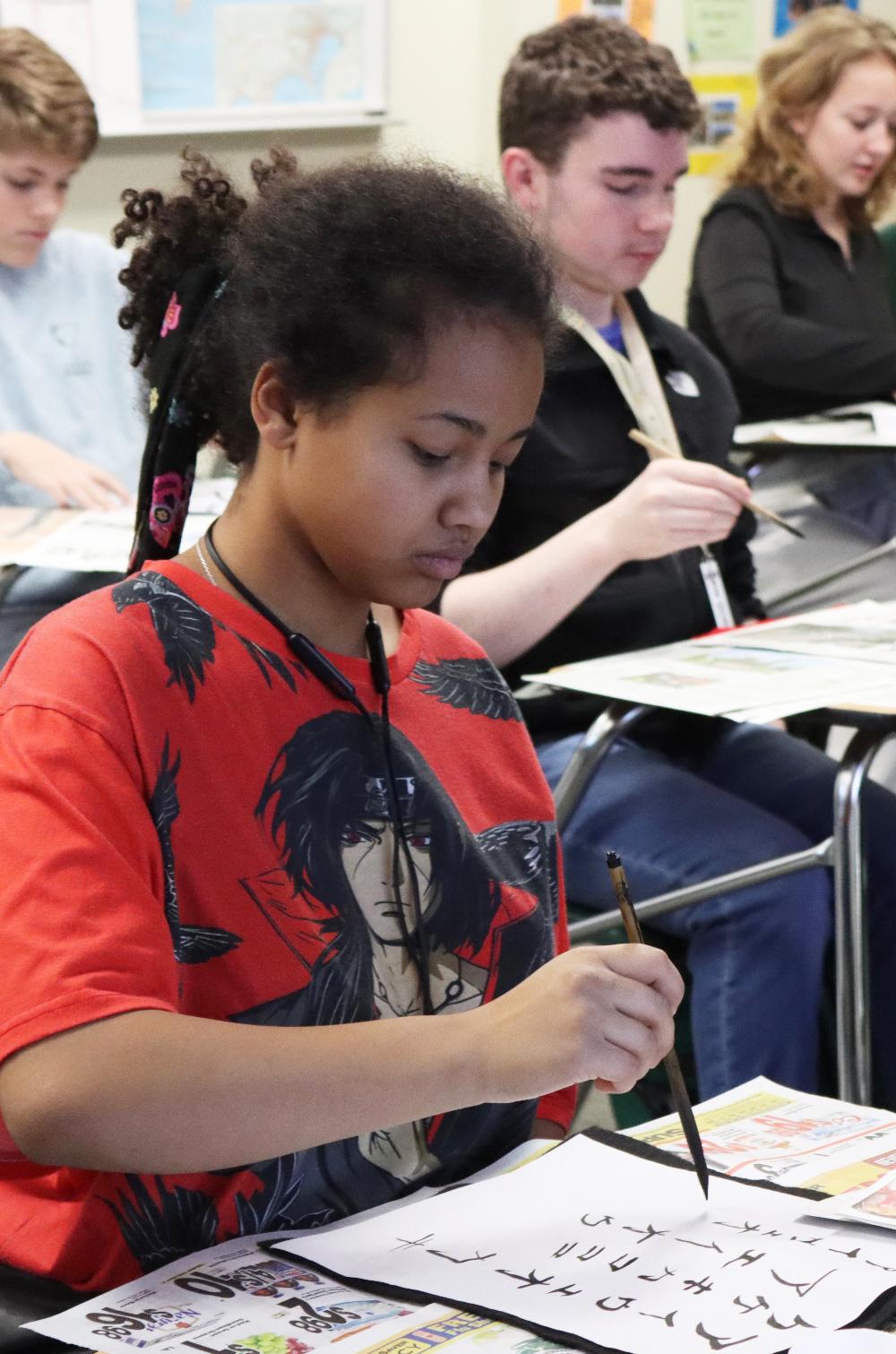
Southwest High School students concentrate as they work on calligraphy in their Japanese world language class this fall. Many Silver Hawks are learning about the Japanese language, culture and history through the course, which has been offered at LPS since 2002. Southwest is one of the few high schools in Nebraska to provide the course for students.
